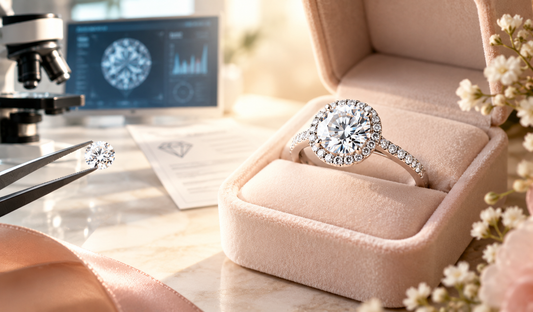
What Is Lab Grown Jewelry? A Complete Guide to Lab Grown Diamonds
Meta description: Curious about lab grown diamonds? Learn how they are made, how they compare to natural stones, and why more buyers are choosing them for rings, earrings and everyday jewelry.
Walk into any jewelry store today and you will notice a quiet shift. Lab grown diamonds are no longer a niche product. They are showing up in engagement rings, wedding bands, tennis bracelets and everyday earrings. If you have been wondering what lab grown jewelry actually is, and whether it deserves a place in your jewelry box, this guide covers everything you need to know.
What Is a Lab Grown Diamond?
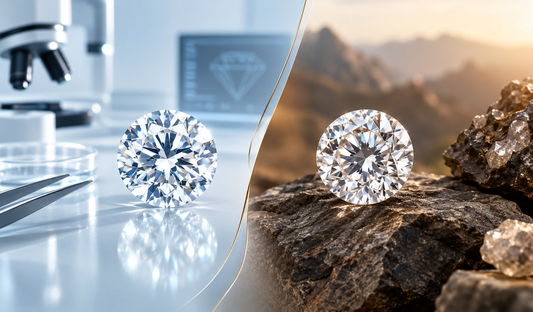
A lab grown diamond is a real diamond. It has the same crystal structure and the same chemical composition as a mined diamond: pure carbon arranged in a diamond lattice. It also has the same hardness and the same brilliance. The only difference is where it was created. A natural diamond forms deep inside the earth over billions of years. A lab grown diamond is grown above ground, in a controlled environment, in a matter of weeks.
This is why lab grown diamonds are also called lab created, cultured or man-made diamonds. They are not "fake" diamonds. A fake, such as cubic zirconia or moissanite, is a different material altogether. A lab grown diamond is the genuine material, just grown by people instead of by geology.
How Are Lab Grown Diamonds Made?
There are two main methods used today.
1. HPHT (High Pressure High Temperature). This method copies the conditions of the earth's mantle. A tiny diamond seed is placed in carbon and exposed to extreme pressure and heat. The carbon melts and slowly crystallizes around the seed, building a larger rough diamond.
2. CVD (Chemical Vapor Deposition). Here, a diamond seed is placed in a sealed chamber filled with carbon-rich gas, usually methane. The gas is heated until it breaks down, and carbon atoms settle onto the seed layer by layer. Over several weeks, a diamond crystal grows.
Both methods produce rough crystals that are then cut and polished by skilled artisans, exactly like mined stones. Many of the lab grown diamonds in modern jewelry, including pieces labeled "Lab Grown / CVD Diamond," come from the CVD process.
Do Lab Grown Diamonds Look Different?
To the naked eye, no. Even trained jewelers cannot tell the two apart without specialized equipment. Lab grown diamonds sparkle with the same fire, the same scintillation and the same brilliance. They also score a perfect 10 on the Mohs hardness scale, which means they are durable enough for everyday wear, including engagement rings worn for decades.
The difference shows up only under advanced testing, where gemological labs examine growth patterns and trace elements. That is why reputable sellers always provide certification.
The 4Cs Apply to Lab Grown Diamonds Too
Lab grown diamonds are graded using the same 4Cs as natural diamonds:
- Cut: how well the diamond is shaped and faceted. This has the biggest effect on sparkle.
- Color: graded from D (colorless) down to Z. Lab grown diamonds are widely available in the colorless D to F range.
- Clarity: how free the stone is from internal inclusions, from Flawless to Included. VS1 and VS2 are popular choices for clean, eye-clean stones.
- Carat: the weight of the diamond.
When you see a description such as "3.50 TCW E/VS1 Radiant Cut," it is telling you the total carat weight, the color grade (E), the clarity grade (VS1) and the shape of the stone. Learning to read these details makes you a more confident buyer.
Why Certification Matters
A grading report from a recognized laboratory such as IGI (International Gemological Institute) is your proof of quality. It confirms the diamond's grades, its measurements and the fact that it is lab grown. When you buy lab grown jewelry, always ask for a certificate for any center stone. It protects your purchase and makes the piece easier to insure or resell later.
Why Are People Choosing Lab Grown Jewelry?
Better value. Lab grown diamonds usually cost significantly less than mined diamonds of the same size and quality. That means you can choose a larger stone, a higher color grade or a cleaner clarity for the same budget, or simply spend less.
Transparent origin. Many buyers like knowing exactly where their stone came from. Because lab grown diamonds are made in controlled facilities, they avoid the concerns about conflict and labor conditions that sometimes surround mining.
Lower environmental footprint. Mining involves moving large amounts of earth. Growing diamonds in a lab uses far less land disturbance. It is worth noting that energy use varies by producer, and the environmental benefit is strongest when a lab uses renewable energy. Still, many buyers see lab grown as the lighter-touch option.
Design freedom. With a more accessible price, you can explore bold designs, such as halo settings, three-stone rings, stacked bands and statement earrings, without compromising on diamond quality.
What Kinds of Lab Grown Jewelry Can You Buy?
Almost anything you can imagine:
- Engagement rings and wedding bands
- Solitaire and drop earrings
- Tennis bracelets and bangles
- Pendants and necklaces
- Men's rings and cufflinks
- Fully custom, one-of-a-kind pieces
Metal choice matters just as much as the stone. 14K gold in yellow, white or rose is the most popular choice because it balances durability, color and price. Sterling silver works well for fashion pieces.
Caring for Lab Grown Jewelry
Care is simple, and it is the same as for natural diamonds. Clean your jewelry every few weeks with warm water, a few drops of mild dish soap and a soft toothbrush. Rinse well and pat dry with a lint-free cloth. Store each piece separately, and have prongs checked by a jeweler once a year, especially for rings you wear daily.
Final Thoughts
Lab grown jewelry gives you the same beauty, the same durability and the same sparkle as mined diamonds, with more flexibility in budget and design. Whether you are choosing an engagement ring, an anniversary gift or something special for yourself, understanding the basics puts you in control. At Reminiscence Jewels, every piece is crafted with care, and customization is always an option, so your jewelry can reflect your story.
Tags: