Lab Grown vs Natural Diamonds: Which One Is Right for You?
Meta description: Comparing lab grown and natural diamonds? We break down price, quality, ethics, environmental impact and long-term value so you can choose with confidence.
It is one of the most common questions in modern jewelry: should you buy a lab grown diamond or a natural one? Both are real diamonds, both are beautiful, and both can last for generations. But they differ in price, origin and long-term value. This honest comparison will help you decide which fits your needs.
The Short Answer
Chemically, physically and optically, lab grown and natural diamonds are the same. The real differences are origin, price and rarity. Everything else comes down to what matters most to you.
1. Appearance and Quality
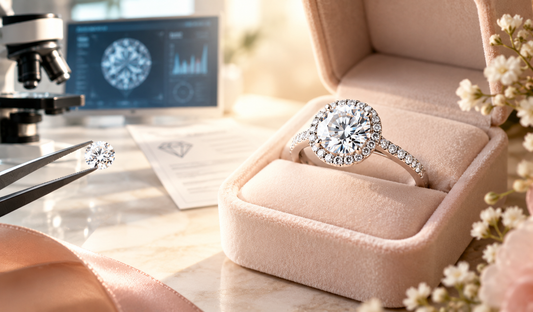
Put a lab grown diamond and a natural diamond side by side, and you will not be able to tell which is which. Both are pure carbon. Both have a hardness of 10 on the Mohs scale. Both can be graded D to Z for color and Flawless to Included for clarity.
If anything, lab grown diamonds can be more consistent. Because they are grown in controlled conditions, high color and high clarity stones are widely available. Natural diamonds in the same grades are much rarer, which pushes their prices up sharply.
Winner: Tie. Both deliver the same beauty and durability.
2. Price
This is where the gap is biggest. Lab grown diamonds typically cost far less than natural diamonds of comparable size and quality. In practice, this means you can:
- Choose a larger carat weight for the same budget
- Upgrade to a higher color and clarity grade
- Spend the savings on a better setting, extra stones or a custom design
For example, a budget that buys a modest natural diamond may stretch to a much bigger lab grown stone, such as a 3 carat radiant cut in E color and VS1 clarity, set in 14K gold.
Winner: Lab grown, if budget and size matter to you.
3. Origin and Ethics
Natural diamonds are mined, and while the industry has made progress through programs like the Kimberley Process, buyers still care about traceability. Lab grown diamonds offer a clear, controlled origin, which gives many shoppers peace of mind.
That said, many mined diamonds today are responsibly sourced, and some buyers value the heritage and story of a stone that formed in the earth. Ethics is personal, and a trustworthy seller should be able to tell you where your diamond came from, whichever you choose.
Winner: Depends on your values, but lab grown offers the simplest transparency.
4. Environmental Impact
Mining requires land clearing, water and heavy machinery. Lab grown diamonds avoid most of that. However, growing diamonds is energy intensive, so the footprint depends on the power source. Labs that run on renewable energy have a clear advantage.
The honest takeaway is that lab grown diamonds generally have a smaller land and ecosystem impact, but buyers who care deeply about this should ask producers about their energy practices.
Winner: Lab grown, with the caveat above.
5. Rarity and Resale Value
This is the area where natural diamonds hold an edge. Natural diamonds are finite, and their rarity is part of their appeal. Historically they have held more resale value, although even natural diamonds usually sell for less than their retail price when resold.
Lab grown diamond prices have been falling as production technology improves and supply increases. That means a lab grown diamond should be bought for beauty, meaning and enjoyment, not as a financial investment. If you view jewelry as a store of value, natural diamonds still have the stronger track record.
Winner: Natural, for rarity and resale.
6. Sentimental Value
Some people love the idea that their diamond is billions of years old. Others love the idea that their diamond represents modern innovation and a conscious choice. Neither feeling is wrong. A ring's meaning comes from the person who gives it, the person who wears it and the story behind it, not from where the carbon came from.
7. Certification
Both types of diamonds can be certified by respected labs such as IGI and GIA. Lab grown diamond reports state clearly that the stone is laboratory grown. Whichever you buy, insist on a grading report. It confirms exactly what you are getting and protects you if you ever want to insure or resell.
Quick Comparison
| Factor | Lab Grown | Natural |
|---|---|---|
| Material | Real diamond (carbon) | Real diamond (carbon) |
| Appearance | Identical | Identical |
| Hardness | 10 Mohs | 10 Mohs |
| Price | Much lower | Much higher |
| Origin | Controlled, traceable | Mined |
| Resale value | Lower | Stronger |
| Rarity | Producible | Finite |
Who Should Choose Lab Grown?
Lab grown is a great fit if you:
- Want a bigger or higher-quality stone for your budget
- Prefer a transparent, controlled origin
- Plan to wear and enjoy the jewelry rather than invest in it
- Want to put your budget into custom design
- Are buying fashion pieces such as earrings, bracelets or pendants where size and sparkle matter
Who Should Choose Natural?
Natural may suit you if you:
- Value rarity and the geological story of the stone
- Want a piece with stronger long-term resale potential
- Are buying a traditional heirloom and prefer a mined stone
Can You Mix Both?
Absolutely. Many people choose a natural stone for a sentimental ring and lab grown diamonds for earrings, bracelets and everyday pieces. There is no rule that you must pick one forever.
Final Thoughts
There is no universal right answer, only the right answer for you. If you want maximum sparkle and size for your money, with a clear origin, lab grown diamonds are an excellent choice. If rarity and resale matter most, natural diamonds still have their place. What matters most is buying from a seller who is honest about what you are getting, provides certification and crafts the piece with care.
At Reminiscence Jewels, we offer handmade, customizable lab grown diamond jewelry in gold and silver at fair prices, so you can focus on what matters: the moment the jewelry is meant for.
Tags:
Previous
What Is Lab Grown Jewelry? A Complete Guide to Lab Grown Diamonds
Next
How to Choose the Perfect Lab Grown Diamond Ring: A Buyer's Guide